

Mud won't stop your horse from shedding, but it will trap the loose coat against his skin right when rain rot season starts. Here's what actually helps.
Horse Shedding Season: 4 Tips to Survive Shedding Season
Every spring, horse owners both rejoice at and dread the first signs of shedding season. While your hairy horse finally shedding out means that spring is almost here, it also means that most of that hair will inevitably end up on you. These tips can help you successfully navigate shedding season and get your horse back to looking sleek and stunning.
From minimizing the hair that gets on your clothes to getting great grooming results, these tips can help you survive shedding season.
We make mud panels, so curry combs aren't our usual focus. But shedding season and mud season happen during the same weeks, on the same horses, and that overlap matters more than most people realize. Not for the reason you'd think.
Take Advantage of the Light
The natural changes in daylight as spring approaches are what trigger your horse to begin shedding. Look for ways to expose your horse to longer daylight hours. Maximizing turnout time can help, and leaving barn doors and windows open allows more natural light to reach your horse while he's in his stall.
You can also artificially replicate longer daylight hours by using lights in your barn. Leaving lights on later and turning them on earlier can encourage your horse's body to think spring has arrived sooner, prompting an earlier shed.
If you use this technique, be sure your horse receives enough light for the effect to work, and consider blanketing if temperatures remain cool while the winter coat is shedding.
Use the Right Tools
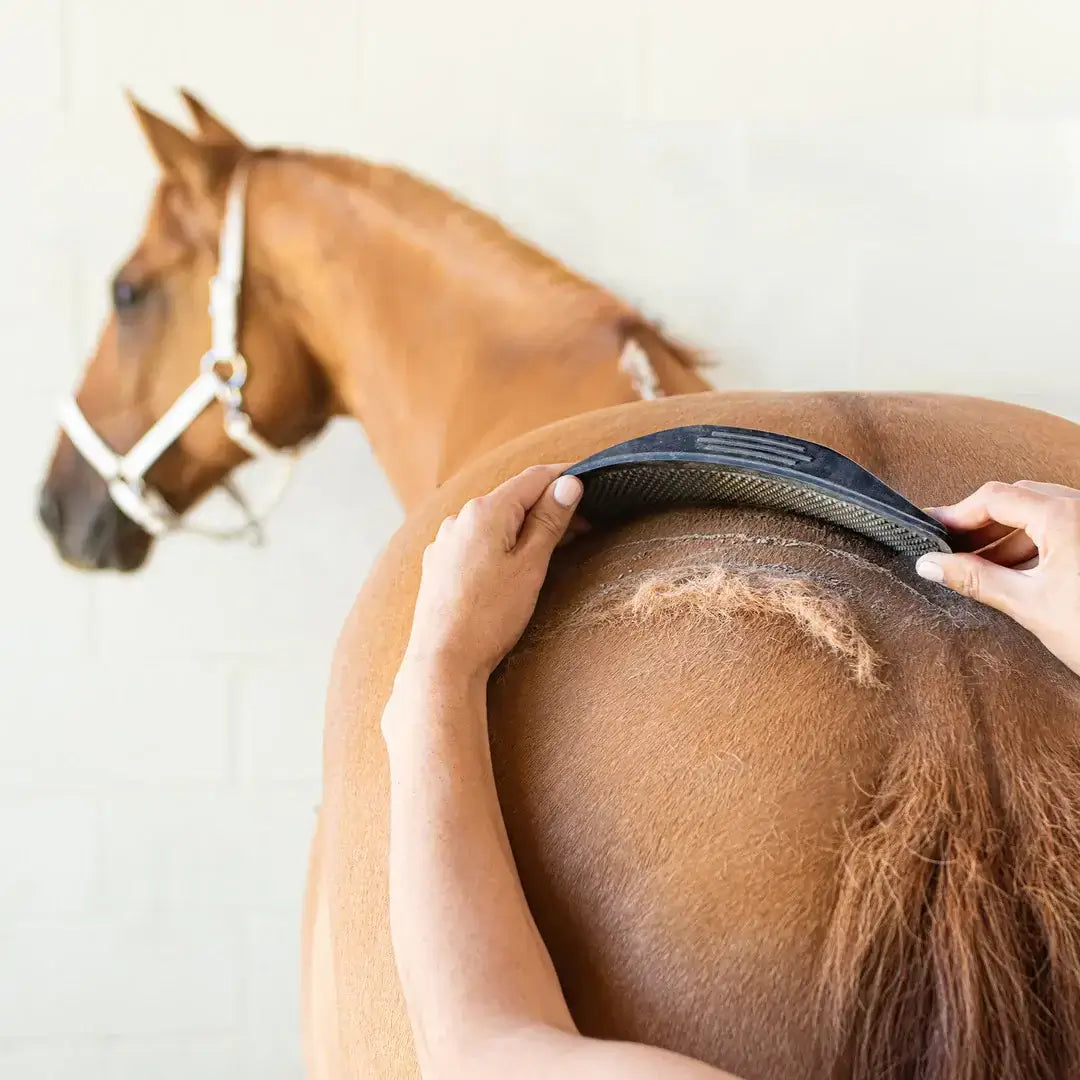
The right grooming tools make shedding season much easier for both you and your horse. Make sure your grooming kit includes curry combs and shedding blades. Many owners also like grooming gloves, which collect loose hair while giving horses a satisfying scratch.
Shedding blades come in several styles, so don't be afraid to experiment until you find what works best for your horse.
Our current favorite shedding tool is the StripHair Gentle Groomer. It works exceptionally well during shedding season and is also excellent for removing caked-on mud and stubborn cannon bone crud.
An equine vacuum can also make a huge difference. Instead of sending loose hair flying into the air, it captures the hair before it ends up on your clothes or throughout the barn. Try currying with one hand while vacuuming with the other.
Clipping your horse can also help. Clipping creates a cleaner appearance and reduces the amount of long winter hair that has to shed naturally. It's especially useful if you're preparing for early-season shows. A trace clip can reduce sweating during work if your horse is slow to shed.
If Your Horse Isn't Shedding, Don't Blame the Weather
A winter coat that persists into late spring is one of the leading clinical signs of PPID (Equine Cushing's Disease). Horses affected by PPID often retain their winter coat well into summer because the normal shedding process is impaired.
This is worth taking seriously. Laminitis is a common condition associated with PPID, and many owners notice hoof problems before the disease is diagnosed. A horse that truly isn't shedding deserves a conversation with your veterinarian rather than being dismissed as a late shed.
If you decide to clip your horse, be sure to keep a blanket available for those chilly spring nights.
When temperatures are warm enough, giving your horse a thorough bath and deep scrubbing can also help loosen hair without sending it flying everywhere.
The Part of Shedding Season Nobody Warns You About
Here's a myth worth killing first: mud doesn't stop your horse from shedding.
What mud changes is where that hair goes.
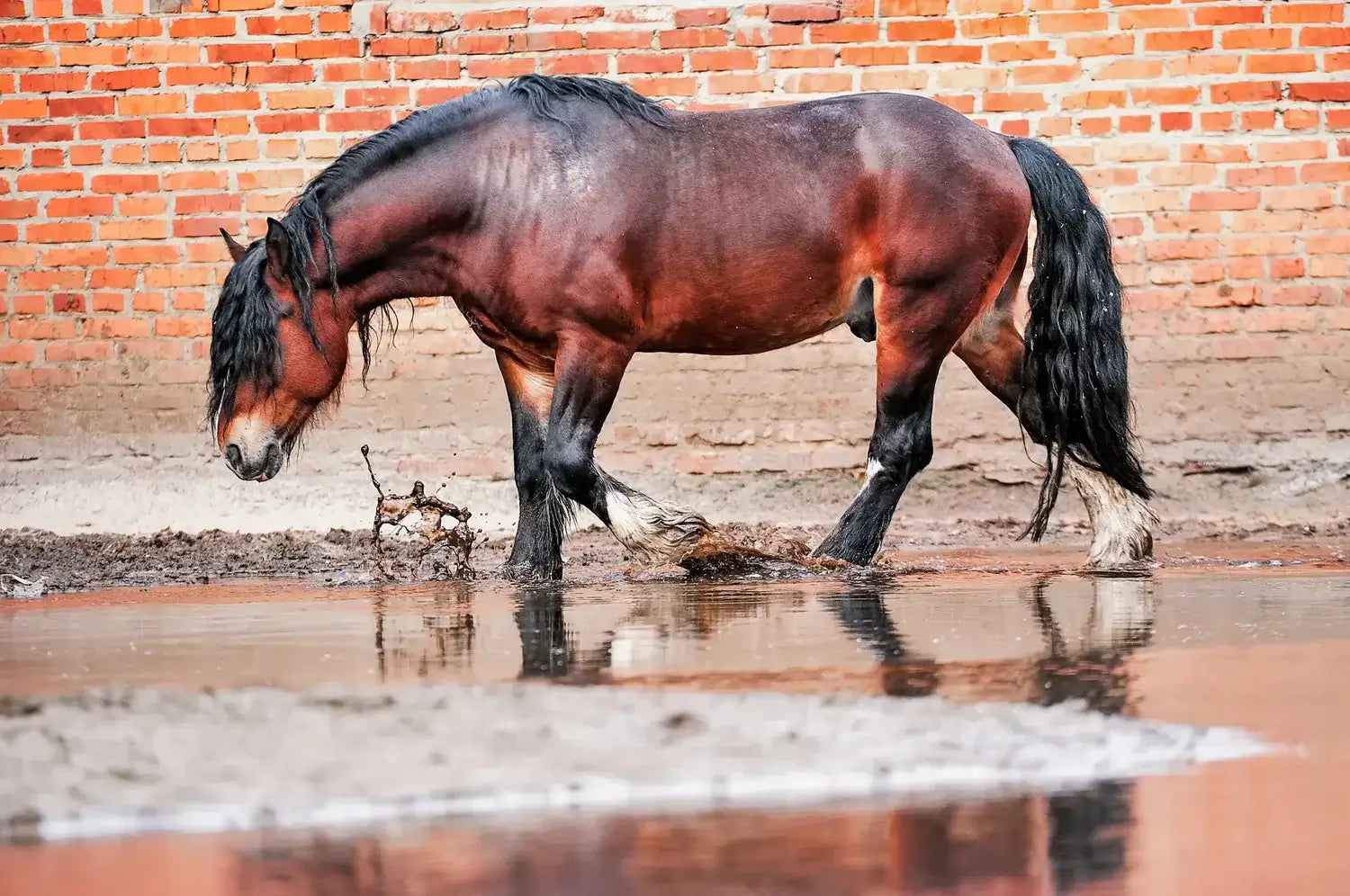
In a dry horse, released hair works its way out and falls off. In a muddy horse, it doesn't. It stays put, matted into the coat with dirt and water. Now your horse is wearing a layer of dead hair that holds moisture against his skin for days after the rain stops. That's the problem. Not the shedding, but the sponge.
And spring is the worst possible time for a sponge. Per the Merck Veterinary Manual, Dermatophilus congolensis, rain rot, lives quietly on normal skin and only turns into an infection when climatic conditions stimulate it, with prolonged wetting and humidity being the triggers. The mechanism is maceration: sustained moisture softens the outer skin layer until the barrier fails. Veterinary dermatology texts list prolonged wetting and skin damage as the two most important predisposing factors, full stop. PetMD is blunt about who's at risk, horses that stand in a muddy or wet stall are predisposed.
The trapped-coat piece isn't theoretical either. Max Corcoran, a professional groom interviewed by Practical Horseman on Cornell's dermatology research, notes that horses who aren't groomed daily are more susceptible precisely because heavy winter coats hold moisture against the skin for extended periods.
Stack it up: a coat in transition, dead hair woven through it, and no dry hours to break the cycle. That's why so many horses come out of March with a scabby topline and crusty pasterns, not from bad grooming, but from never getting dry.
The good news is that the fix is boring. Merck notes that dry weather speeds healing on its own. Skin that gets a real chance to dry out mostly defends itself. The question is just whether your horse has anywhere to do that, a loafing area, a gateway, the strip in front of the shelter. Somewhere he chooses to stand that isn't soup.
That's the whole reason Lighthoof exists. Not to make paddocks pretty. To give the skin a chance.
Already fighting a caked-on coat? Here's how to get mud off a shaggy horse. If you want to know how much dry ground your paddock actually needs, the panel calculator will size it.
Suit Up
Horse hair has a way of sticking to everything, especially your clothes. Keep a lightweight rain jacket or windbreaker handy to throw over your clothing before grooming. When it's time to do laundry, consider washing your grooming clothes separately so loose hair doesn't end up throughout the rest of your load.
Install Scratching Posts
Many horses become especially itchy during shedding season, making scratching posts a welcome addition to the paddock or stall.
Rubber scratching panels can be mounted on fence posts, stall walls, or barn corners, giving your horse a safe place to scratch while helping loosen shedding hair naturally.
Final Thoughts
Shedding season always brings extra grooming, extra cleanup, and plenty of loose hair, but the right routine makes it much more manageable.
Remember that while you can't change when your horse sheds, you can support healthy skin by grooming regularly, removing trapped hair, and giving your horse access to dry footing whenever possible.
Before long, that shaggy winter coat will be gone, and spring will be in full swing.
References
-
Murphy, B.A., et al. (2020). The effects of extended photoperiod and warmth on hair growth in ponies and horses at different times of year. PLOS ONE, 15(1): e0227115.
-
Merck Veterinary Manual. Dermatophilosis ("Rain Rot") in Horses.
-
Small and Large Animal Dermatology Handbook, Vol. 1. University of Minnesota. Section 1.5: Dermatophilosis.
-
PetMD. Rain Rot in Horses.
-
Practical Horseman. Beneath the Surface of Rain Rot.
-
McFarlane, D. (2011). Equine Pituitary Pars Intermedia Dysfunction. Veterinary Clinics of North America: Equine Practice, 27(1), 93–113.

Leave a comment
This site is protected by hCaptcha and the hCaptcha Privacy Policy and Terms of Service apply.