

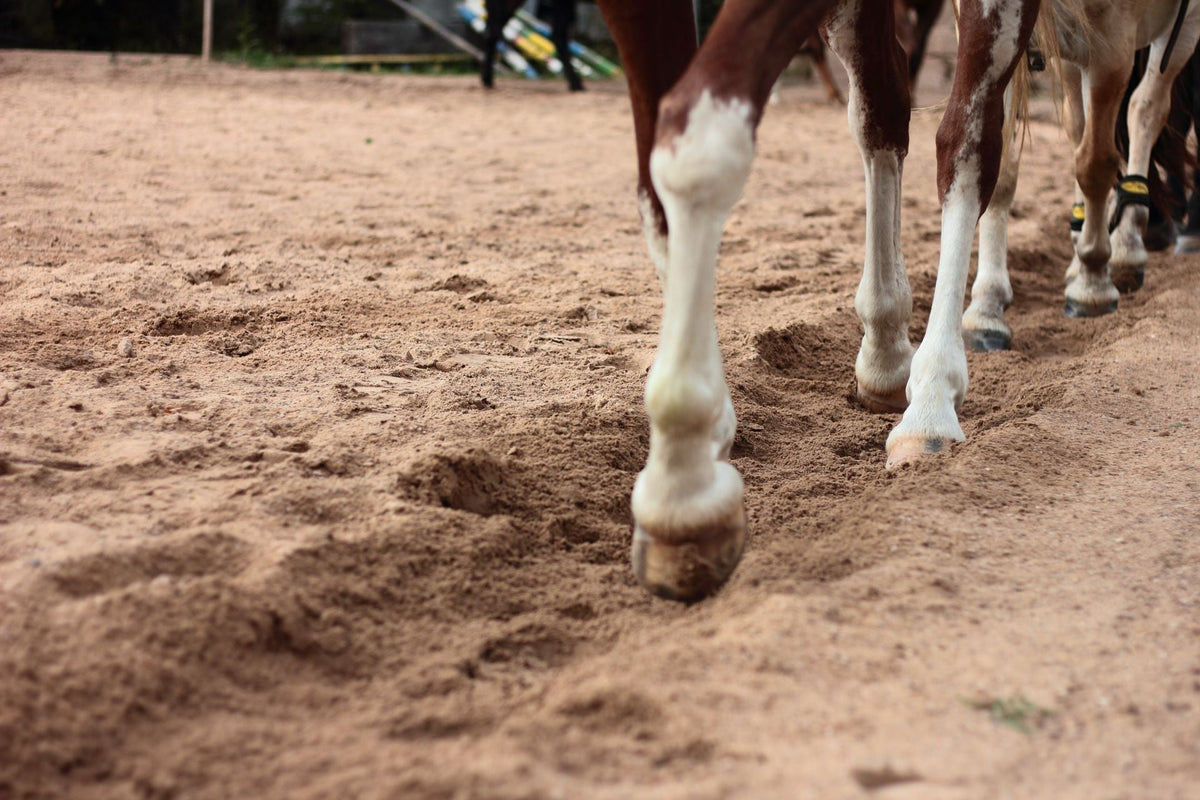
Short answer: A horse won't land heel-first when the back of its foot is less comfortable than the front. The cause falls into one of four groups: (1) the frog and digital cushion, most often thrush or soft, underdeveloped heels; (2) hoof shape and balance, such as long toes and low or underrun heels; (3) the deeper structures around the navicular bone; or (4) pain elsewhere in the body that shortens the stride. Groups 1 and 2 are the most common, the cheapest to address, and the most affected by the footing.
This post walks through all four so you can have a more useful conversation with your farrier and your veterinarian. It is not veterinary advice, and it can't tell you which group your horse is in. Only a hands-on exam can do that.
What does a toe-first landing actually mean?
Watch a sound horse walk out on firm, level ground and you will typically see the front feet land heel-first, or at least flat, with the heel touching a fraction before the toe. The heel bulbs, frog, and digital cushion (the fibrous pad above the frog) are built to take that first contact and spread the shock.
When a horse lands toe-first instead, the first contact is the toe wall, so the impact is taken by the front of the hoof wall, the laminae, and the front rim of the coffin bone, structures that aren't designed for it. Meanwhile the back of the foot gets less stimulation, which over time makes the digital cushion and frog softer and less able to do their job.
Hoof-care researchers have measured this. In a study of horses with confirmed navicular disease, force on the navicular bone early in the stride was roughly double that of sound horses, and the authors traced it to the horse contracting the deep digital flexor muscle to hold its heels off the ground. Nerve-blocking the heels reduced that force significantly. In plain English: the horse was protecting a sore heel, and the toe-first landing was the visible result.
So a toe-first landing is a symptom. The useful question is what's making the heel uncomfortable, and the answer sorts into four groups.
The 4 groups of reasons a horse stops loading his heels
| Group | What's going on | Who usually addresses it | How common |
|---|---|---|---|
| 1. Frog and digital cushion | Thrush, central sulcus infection, weak digital cushion, bruised heels | Owner and farrier, vet if infection is deep | Very common |
| 2. Hoof shape and balance | Long toes, low or underrun heels, contracted heels, medial-lateral imbalance | Farrier, with vet input on angles | Common |
| 3. Deeper structures | DDFT, navicular bursa and bone, coffin joint and its ligaments | Veterinarian, usually with imaging | Less common than it's diagnosed |
| 4. Not the foot | Shoulder, neck, back, SI or hind-end pain shortening the stride | Veterinarian, bodyworker, saddle fitter | Often overlooked |
Group 1: The frog and digital cushion
Thrush is the first thing to rule out, and it's easy to miss. A frog can look fine from the outside while the crack between the heel bulbs (the central sulcus) is infected and tender. A horse with a sore central sulcus won't land on it. Wet footing is the main driver, and fall and winter are peak season for it.
The usual approach is unglamorous: clean the sulcus out, treat it daily with something that reaches the bottom of the crack rather than just the surface, and keep going for weeks, not days. Barefoot rehab specialist Pete Ramey puts "address painful frog sulcus infections first" at the top of his rehabilitation protocol for this reason. Harsh caustic products can damage healthy tissue along with the infection, so it's worth asking your farrier or vet what they'd use.
A weak, underdeveloped digital cushion is the second common cause in this group. Ramey and Dr. Robert Bowker of Michigan State have both argued that many domestic horses never fully develop the dense, fibrous tissue at the back of the foot, and that the fix is to load the caudal foot in a way the horse can tolerate so it strengthens. The tools they describe are padded hoof boots for work, pea gravel loafing areas where horses stand around water and hay, turnout on varied terrain, and preserving live frog depth.
Bruised heels from thin soles or hard ground round out this group. Protection and time are the usual remedy.
Group 2: Hoof shape and balance
Long-toe, low-heel conformation, underrun heels where the heel tubules have run forward under the foot, a flat or negative palmar angle (the coffin bone tipped back instead of slightly forward), and contracted heels all make the back of the foot harder to load comfortably. The Merck Veterinary Manual and Mad Barn both name long toes and low heels as primary predisposing factors for the deeper problems in Group 3, because a long toe delays breakover and increases tension on the deep digital flexor tendon with every stride.
This is farriery territory. The common approaches are shortening and easing breakover (a rolled or rockered toe), rebuilding heel angle over several trim cycles rather than in one, and, where a farrier or vet thinks it's warranted, temporary heel or frog support while the foot regrows. Contracted heels are usually the result of years of not loading the back of the foot rather than a cause, and they tend to open up as the horse starts landing heel-first again.
Group 3: The deeper structures
This is where the deep digital flexor tendon, the navicular bursa, the navicular bone, its supporting ligaments, and the coffin joint live. Vets now group these under "podotrochlosis" or "caudal heel pain" rather than the older catch-all "navicular." One equine veterinarian quoted in The Horse calls podotrochlosis "often overdiagnosed" and says he won't diagnose it without an MRI or bone scan.
Diagnosis runs through hoof testers, nerve blocks (a palmar digital block that abolishes the lameness points to the heel), radiographs for angles and bone, and MRI for soft tissue. Treatments listed in the Merck Veterinary Manual include corrective shoeing, NSAIDs, coffin joint or bursa injections, bisphosphonates, shockwave, biologics such as PRP, bursoscopy to clean up tendon damage, and neurectomy as a last resort. Merck is candid that treatment here is palliative and usually lifelong, with a guarded-to-fair prognosis. Risk factors include small feet under a big body, upright boxy feet, Quarter Horse, Thoroughbred and warmblood breeding, and work on hard surfaces.
If your horse's landing pattern comes with a head bob, a consistent short stride on hard ground, or lameness that gets worse on a circle, this group is a vet call, not a trimming project.
Group 4: It isn't the foot
Anything that makes a horse shorten his stride reduces heel-first landing, because a heel-first landing depends on the front leg reaching fully forward before it comes down. A short, stiff step sets the foot down early and flat or toe-first.
Shoulder, neck, back and sacroiliac pain, hind-end discomfort shifting load onto the front end, poor saddle fit, arthritis anywhere in the limb, and plain stiffness from cold, wet weather or an overdone workout the day before all belong here. Studies of horses with induced lameness describe reduced forward reach, shorter stance, and whole-body compensation as the general adaptation to pain almost anywhere in the limb. The Merck manual even notes that owners of horses with heel pain often first suspect the shoulder, and the reverse mistake is just as easy.
A landing pattern that lives only on stiff days, improves as the horse warms up, and doesn't care much whether the ground is hard or soft is more likely to come from this group than from the foot.
How can I tell which group my horse is in?
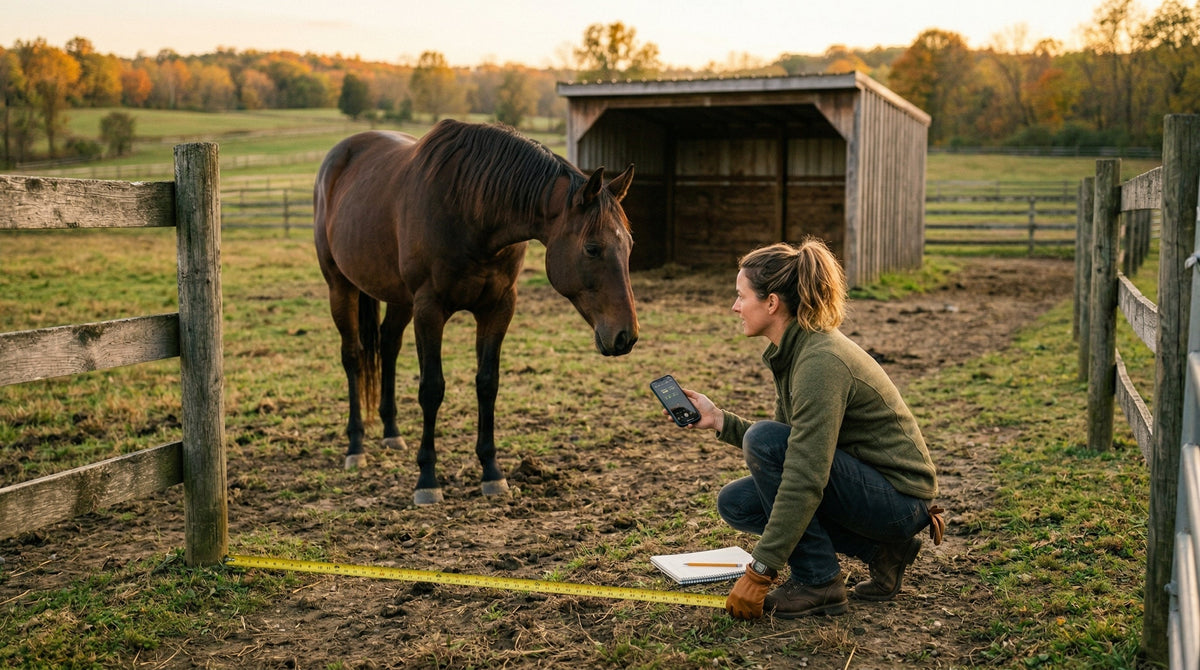
You can't diagnose this at home, but you can gather useful observations for your farrier and vet:
- Look at the central sulcus. Run a hoof pick or a cotton swab all the way to the bottom of the crack between the heel bulbs. Flinching, a foul smell, or black discharge points to Group 1.
- Compare fronts to hinds. Hind feet usually land heel-first even when fronts don't, so a horse landing toe-first on all four is worth a closer look at Group 4.
- Watch on firm ground versus soft, straight versus on a circle. Heel pain tends to get worse on hard ground and on the inside foot of a circle. Body stiffness tends to improve with warm-up and doesn't care much about the surface.
- Notice the pattern over time. Every day, or only after hard work or wet weather?
One detail in the other direction: a horse with sore toes, including the low-grade laminitis that can come with metabolic issues, usually does the opposite of everything above. He lands heel-first, rocks back, and shortens the front of his stride to keep weight off the toes. A toe-first lander is telling you the toe is the more comfortable end of the foot right now.
Where does mud come into this?
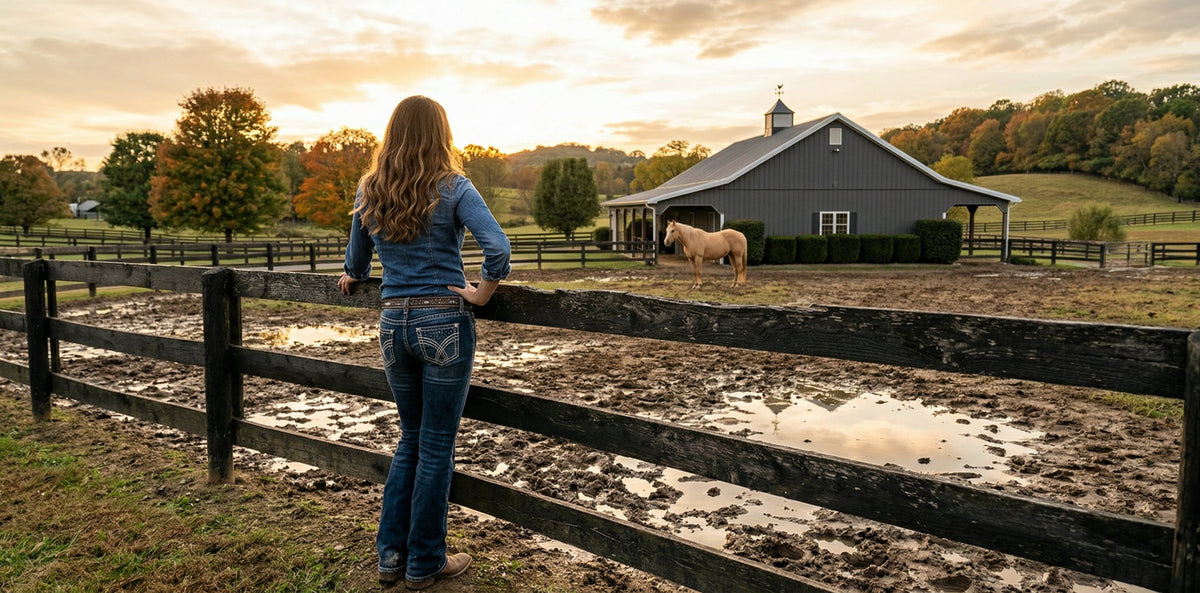
Groups 1 and 2 are the most common causes, and both are fed by wet footing. Standing in mud softens the frog and sole, keeps the central sulcus wet enough for thrush to take hold, and takes away the firm, varied ground that builds a strong digital cushion in the first place. A horse can be on a good trim schedule and still lose ground every winter if the paddock he stands in for 20 hours a day is soup.
Dry, firm footing in the places horses stand most (gates, water, hay, shelter entrances) is the piece of heel health that's fully in the owner's hands. It's the reason our customers' farriers tend to notice the difference before the owners do. See how horse owners are using Lighthoof mud management panels to give those spots permanent stability.
Frequently asked questions
Is a toe-first landing always a sign of pain?
Not always. Horses land toe-first going uphill, in deep footing, and at very slow speeds, and that's normal. A consistent toe-first landing on firm, level ground at a normal walk or trot is worth investigating.
Can a toe-first landing cause navicular problems, or is it the other way around?
Both directions show up in the research. Heel pain leads to a protective toe-first landing, and a sustained toe-first landing increases tension on the deep digital flexor tendon and under-stimulates the back of the foot, which can make the heel more sensitive over time. Breaking the cycle usually means finding and addressing the original source of discomfort.
Do hoof boots help a horse land heel-first?
Padded hoof boots are a standard tool in barefoot rehabilitation for horses with weak or sore heels, because the pad lets the horse load the back of the foot comfortably while it strengthens. Whether they're right for a particular horse is a conversation for your farrier.
Should I raise the heels?
Sometimes, and sometimes the opposite. Heel support can reduce DDFT tension in the short term, but leaving the heels too high can be problematic and prevent the caudal foot from developing. This is a trim-by-trim judgment for your farrier and vet, not a rule.
How long does it take a horse to go back to landing heel-first?
It depends entirely on the cause. A central sulcus infection can improve in weeks. Rebuilding heel angle or a weak digital cushion is measured in trim cycles and months. Deeper structural problems may never fully resolve and are managed rather than cured.
This article is for general education and does not replace an examination by a veterinarian or a qualified hoof-care professional. If your horse is lame, or has changed the way he moves, please have him seen.
Sources
- Wilson AM, McGuigan MP, Fredricson L, Pardoe C. "The force and contact stress on the navicular bone during trot locomotion in sound horses and horses with navicular disease." Equine Veterinary Journal, 2001. Abstract via University of Bath
- Merck Veterinary Manual. Navicular Disease in Horses
- The Horse. Horse Heel Pain: Diagnosis and Treatment
- The Horse. Podotrochlosis 101
- Mad Barn. Caudal Heel Pain in Horses
- Ramey P. Hoof Rehabilitation Protocol
- Bowker R. A New Theory About Equine Foot Physiology
- US Equestrian. Is It Navicular Syndrome? Things You Should Know About Caudal Heel Pain

Leave a comment
This site is protected by hCaptcha and the hCaptcha Privacy Policy and Terms of Service apply.